


Last 7 March 2026, we successfully celebrated the third edition of OncoCENL at the Tolbar space in Amsterdam. This edition, which hosted a total of 25 participants, focused on a topic that is becoming increasingly essential in science: collaboration and communication. This gathering brought together oncology researchers from across the country, from junior to senior profiles, consolidating itself as a key event for the Spanish and Dutch scientific communities dedicated to cancer research. The afternoon was marked by an atmosphere of curiosity and openness, with presentations ranging from innovative therapies to new approaches to the tumour microenvironment.
We were fortunate to have three inspiring speakers who shared not only their research but also their perspectives on how to build a collaborative scientific community.
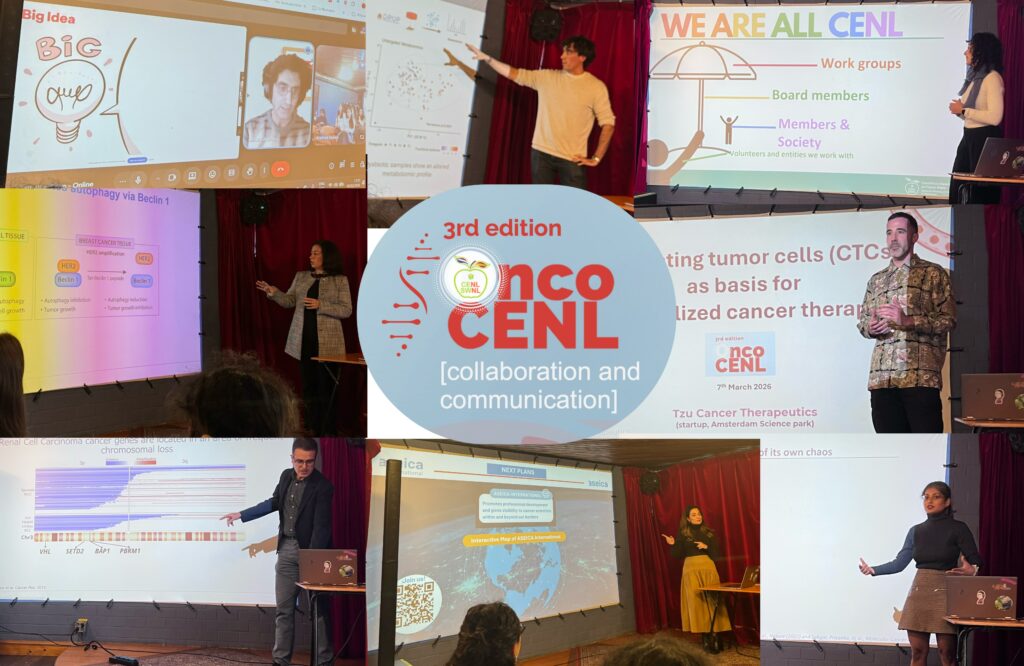
Sofía Ibáñez (Amsterdam UMC) presented her work on a novel method of tumour T-cell clusters and highlighted how impactful science is rarely done in isolation. Noel de Miranda (LUMC) delivered a highly engaging talk on immunogenomics, while also reflecting on the broader landscape of scientific policies and the importance of discussing funding and collaborative research structures, especially for early-career scientists. Silvia Vega Rubin de Celis (University of Duisburg-Essen) presented her work on autophagy in cancer and shared her international career trajectory, which included several postdocs in the United States before establishing her own group in Germany.
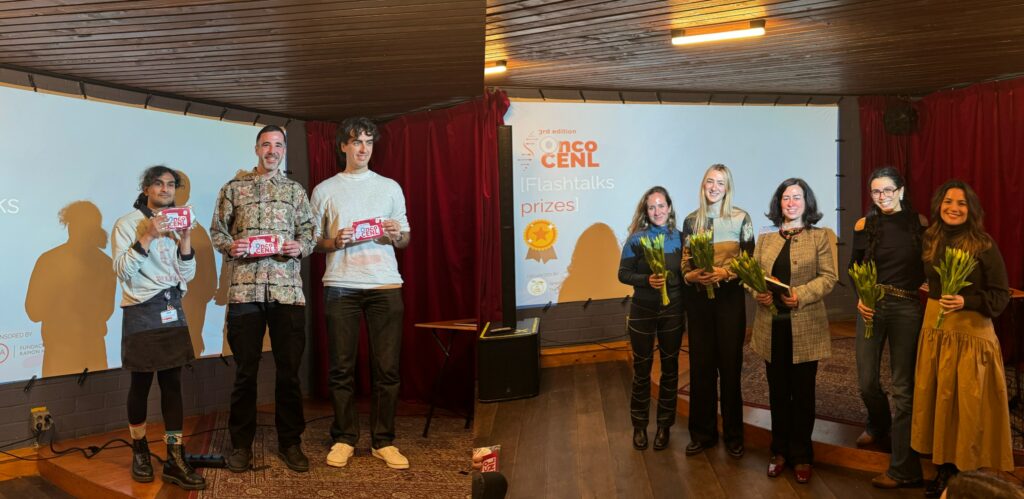
The event also featured six excellent flash talks from cancer researchers, covering topics from circulating tumour cells in blood for tumour detection to optimising intratumoural drug delivery and the tumour microbiome. Congratulations to the winners of the best flash talk award (Alberto Gil, Ajinkya Manelkar and Miguel Parra) for their outstanding presentations.
In addition, there was a session on funding and return opportunities through the CRIS Against Cancer Foundation, led by Jesús Sánchez Ruíz, who also delivered a fantastic scientific communication workshop. He offered practical tips on designing effective scientific posters for conferences: from defining the message and target audience to selecting images, colours, and a structure that truly communicates your science.
Finally, Ana Ruiz Saenz shared more details about the ASEICA International initiative, a great opportunity to strengthen collaborations within the Spanish cancer research community across Europe.
We closed the day with drinks at Café Hesp, ending a day full of science, discussion, and new connections.
A huge thank you to all the speakers, participants, and organisers who made this event possible. And thanks as well to our sponsor, Ramón Areces Foundation, for their unconditional support of our initiatives.
Looking forward to the next edition!